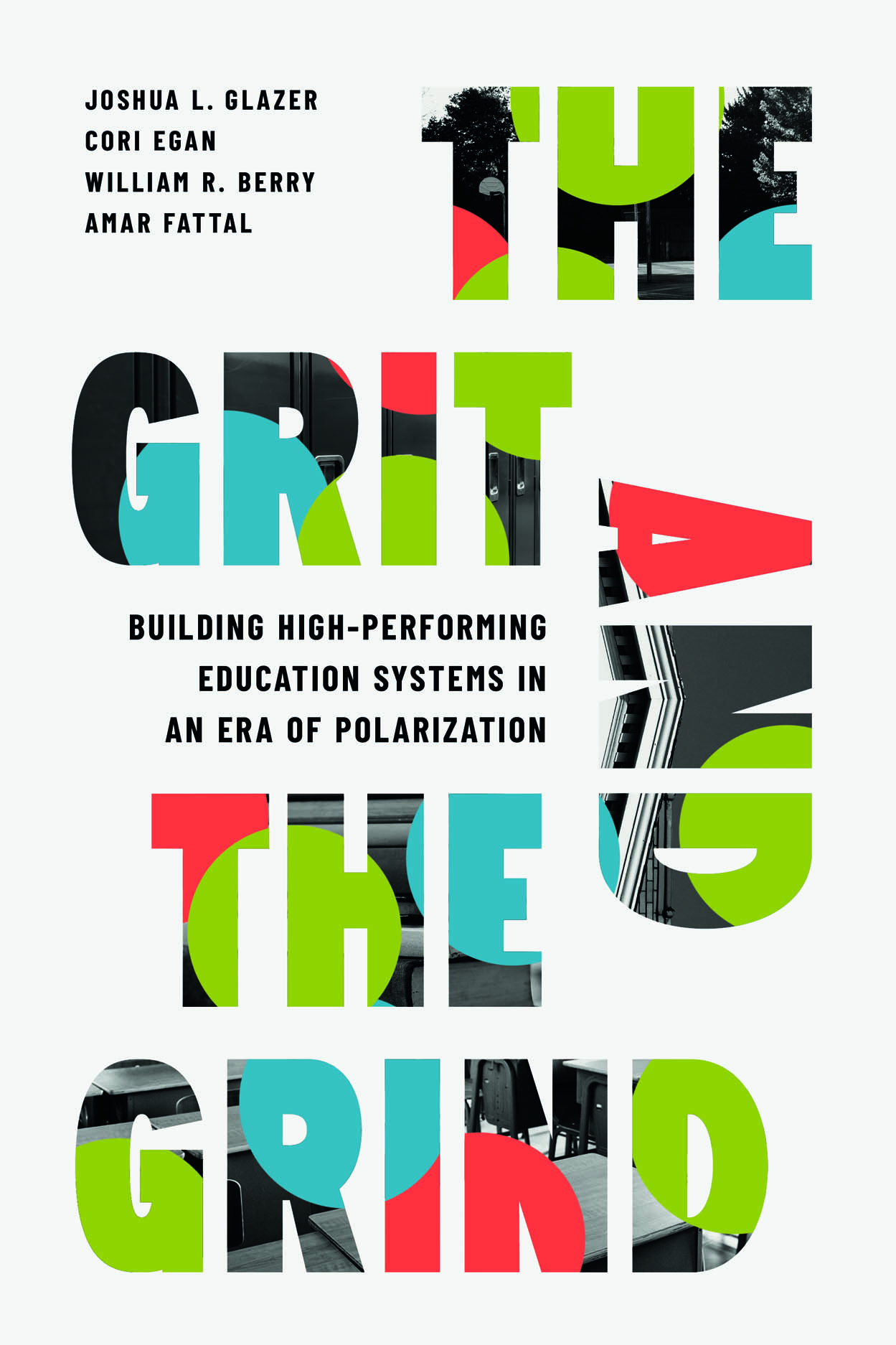
The Grit and the Grind
Building High-Performing Education Systems in an Era of Polarization
The Grit and the Grind
Building High-Performing Education Systems in an Era of Polarization
Offers a much-needed perspective on the connections between community, policymaking, and the improvement of underperforming schools.
School reform remains a fraught issue in the United States as educators, policymakers, and communities strive to improve outcomes for all students. In The Grit and the Grind, Joshua L. Glazer, Cori Egan, William R. Berry, and Amar Fattal examine two ambitious efforts to improve the lowest-performing schools in Memphis, Tennessee. The book offers a rare inside look at the political, organizational, and educational challenges of improving schools at scale.
The two initiatives, the Achievement School District (ASD) and the Shelby County Innovation Zone (iZone), shared a common goal but pursued it through fundamentally different approaches. The ASD was a state-run turnaround district that removed schools from local control and placed them under the management of charter organizations. By contrast, the iZone operated through existing district institutions, relying on local educators and leaders to drive improvement. Despite common goals and substantial resources, the reforms developed in strikingly different ways. Drawing on years of research in Memphis, the authors move beyond familiar debates about charter schools and district reform to explore a deeper question: What does it take to improve schools in complex, pluralistic, and contested democratic societies? Their analysis reveals that educational improvement is simultaneously professional, organizational, and political. Efforts to enhance educational opportunities depend not only on curriculum, leadership, and expertise, but also on the legitimacy, trust, and community support that allow educational systems to learn from experience and sustain improvement.
At once a study of reform, organizations, and politics, The Grit and the Grind challenges simple explanations of success and failure, showing that meaningful improvement is forged through the slow, uncertain work of building systems capable of earning community trust while continuously strengthening teaching and learning.
224 pages | 6 halftones, 1 tables | 6 x 9 | © 2026
Education: Education--Economics, Law, Politics, Pre-School, Elementary and Secondary Education
Reviews

Table of Contents
List of Abbreviations
Preface
Introduction: Of Politics and Systems
Chapter 1. From Reconstruction to Resistance
Chapter 2. Designing Systems and Building Coalitions
Chapter 3. New Systems Encounter Old Problems
Chapter 4. Contested Reform
Chapter 5. Politics, Systems, and Practice
Chapter 6. School Improvement as a Partnership Between the Profession and the Public
Technical Appendix: Methodological Procedures
Notes
Bibliography
Index