Writing with Fire
The Cowboy Suit Tragedy and the Course of a Life
Writing with Fire
The Cowboy Suit Tragedy and the Course of a Life
A cultural and legal history intertwined with a deeply emotional meditation on the course of life, memory, and the documents that define us.
During the 1940s and 1950s, an untold number of American children suffered devastating injuries when the fur-like fabric on the chaps of their Gene Autry–branded cowboy playsuits exploded into flame. Barbara Young Welke was researching this history when her teenage daughter unexpectedly died.
The shock of Welke’s loss transformed her understanding of the children and their families. Her experience also led her to question the norms of scholarship and of writing. Historians are trained to separate the personal from the intellectual, to be suspicious of emotion. These and other norms are embedded in and reinforced by the calling card of academics, the curriculum vitae. Welke wondered how that cold document—with its literal meaning, “the course of life”—had become a form that excludes so much of what gives life meaning. What impact did that have on what we know, how we know it, and how we understand ourselves? Similarly, Welke wondered, what might we see if we looked at the history of the cowboy suit tragedy as more than a matter of lawsuits brought by grieving families? Here, Welke traces the making, marketing, and selling of the cowboy suits; the lengths the defendants went to avoid and limit liability; and the meaning of the injuries, deaths, and legal settlements in the course of these children’s and families’ lives.
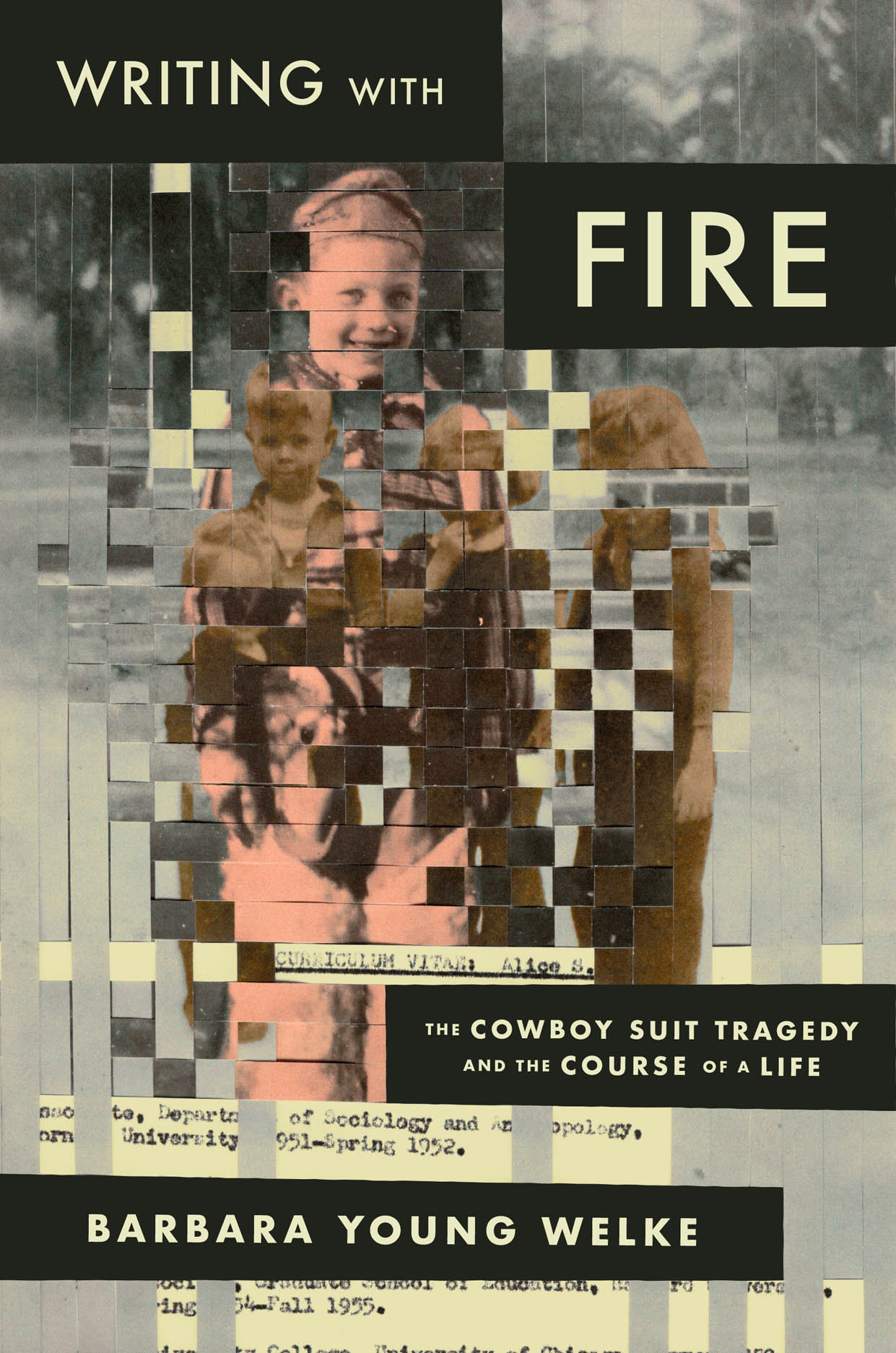
Writing with Fire interweaves the histories of the cowboy suit tragedy and the curriculum vitae. Grounded in archival and legal research, oral histories, and letters Welke wrote her daughter following her death, Welke offers an inimitable examination of trauma, law, autobiography, and identity. The result is revelatory and unforgettable: a provocative historical reflection on life and death, depression and war, markets and families, law, power, and precarity in modern America.
672 pages | 21 halftones | 6 x 9 | © 2026
History: American History, History of Ideas
Law and Legal Studies: Legal History
Reviews

Table of Contents
preface
Part I. Life
child’s play · graduation · curriculum vitae
Part II. Depression & War
longing · “a circle of flame” · guilt · letters from strangers · night sky · “made to man’s order” · magical imaginings · global war · summer’s end · “playing with fire” · fall · “falling out of time” · heavy · lost years
Part III. Markets & Families
first snow · an academic marketplace · calendars · family portraits · memory · “married, two children” · work
Part IV. Law
verdict · your backpack · finding their way to law · an unbridgeable gulf · to be “judged on our capabilities alone” · can I have a body when you cannot?
Part V. Power
the price of settlement · spring · “on our traditional basis of quality alone” · knowing · “public cowboy no. 1” · anniversaries · “the road to preferment”
Part VI. Precarity
time · “for the rest of his natural life” · mornings and ends · the vita of precarity · on being · growing old · a gentle rain
afterword, 2025
acknowledgments
note on methods and sources
notes
cowboy suit case files, published legal opinions, and oral histories
list of illustrations
index