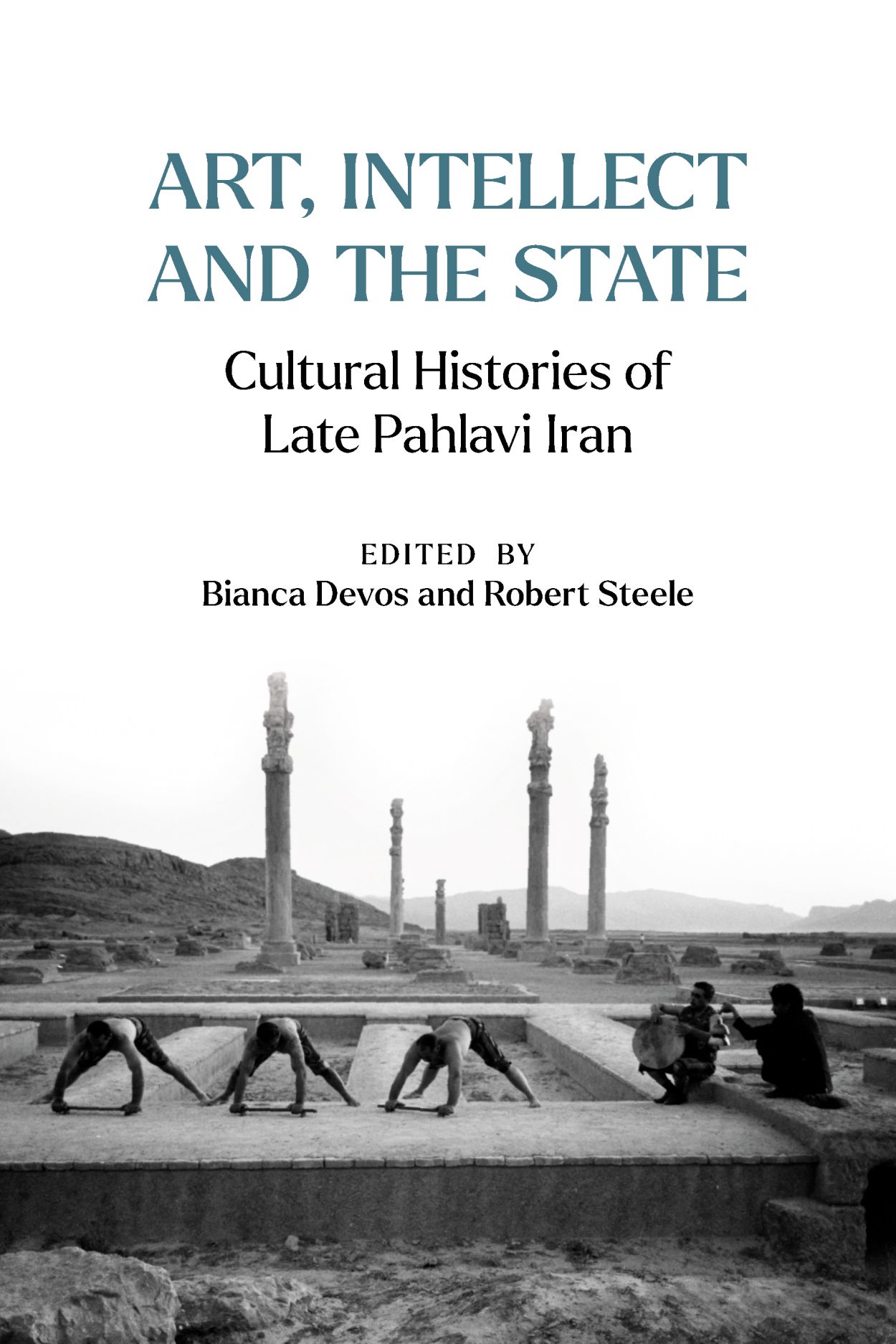
A cross-disciplinary volume on the intersections of—and tensions between—culture and government in Iran’s late Pahlavi period.
In recent years, scholarly interest in Iran’s late Pahlavi period (1941–1979) has grown significantly and historians are increasingly approaching the era not merely as a prelude to the Iranian Revolution, but as a period worthy of study in its own right. New generations of scholars have uncovered fresh sources and offered original perspectives on the cultural and social life of this era. Yet opportunities for cross-disciplinary engagement among scholars from different fields who are exploring similar questions remain limited. This volume, the product of two international workshops at the Austrian Academy of Sciences in Vienna and the University of Marburg, respectively, is a collection of the work of scholars at various stages of their careers from various disciplines investigating the cultural history of late Pahlavi Iran from a multiplicity of perspectives, including: archaeology, architecture, scholarship, media, art, film, literature, politics, religion, museums, music, philosophy, education, and theater.
Chapters explore the interactions between state ideology and the sociocultural sphere, exploring ideas such as: the influence of the press and literature on social discourses; the culturally strategic and identity-forming role of the performing arts; the relationship between state education policy and culture; the employment of foreign artists, architects, scholars, and musicians in the context of Iran’s cultural diplomacy; and the dynamics of (state) religion, spirituality, nationalism, and psychology in modern media or through their dissemination in the media. The volume explores not only the Pahlavi state’s direct participation in facilitating cultural activity or scholarly endeavors, but also how artists, writers, historians, and other cultural actors flourished independent of (sometimes in spite of) the state apparatus.
The volume does not seek to provide an encyclopaedic collection detailing every aspect of culture in the Pahlavi period, but the case studies explored demonstrate the breadth and complexities of this field in the historiography. Moreover, by shedding light on the various features of culture in the late Pahlavi era and encouraging multidisciplinary discussions, the volume aims to contribute to a greater understanding of the vibrant cultural life in Iran during this period.