Distributed for Intellect Ltd

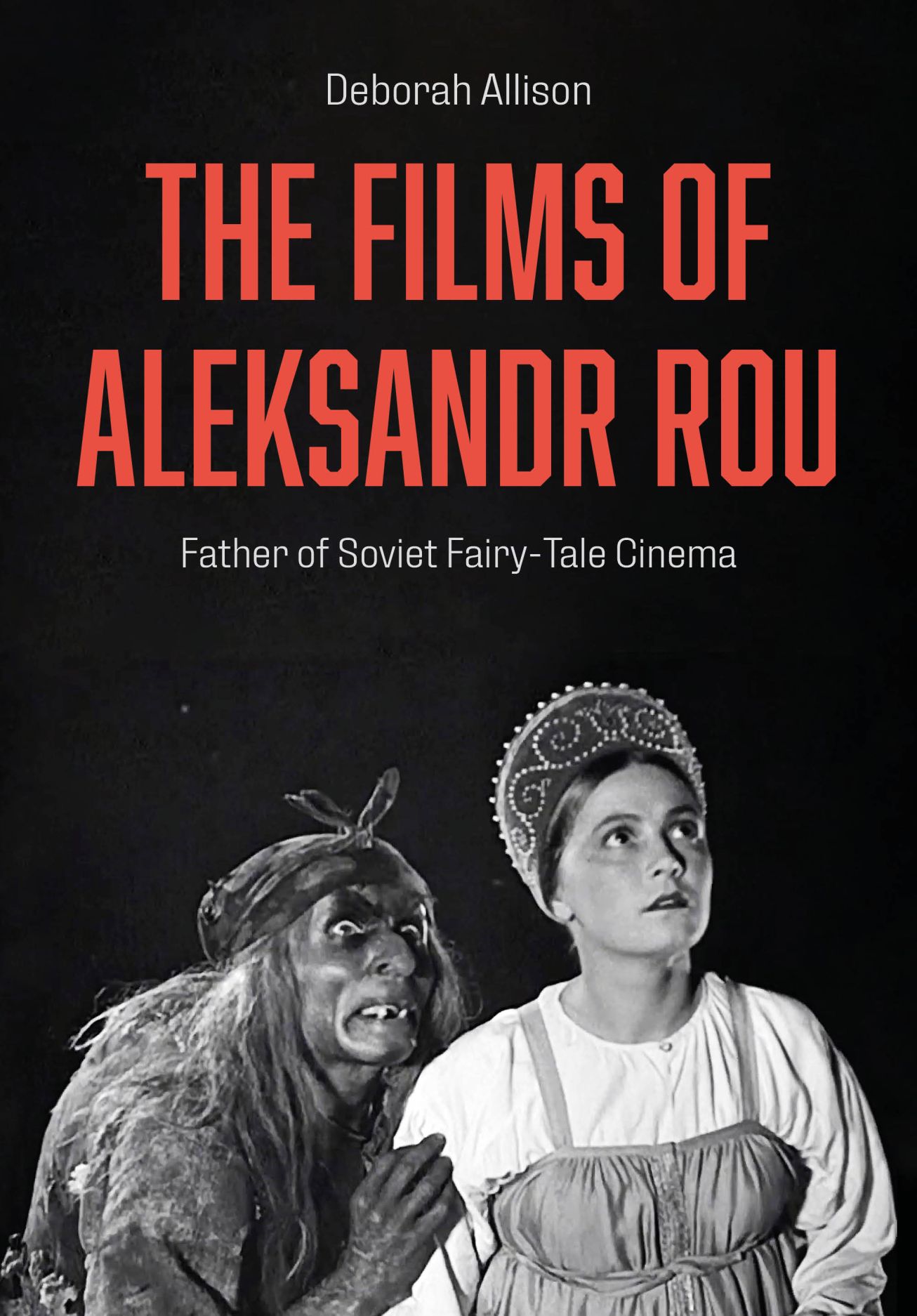
The Films of Aleksandr Rou

Father of Soviet Fairy-Tale Cinema

Journey through the development of the magical film works of Russia’s “King of the Fairy Tales,” Aleksandr Rou.

More than fifty years after his death, the Soviet filmmaker, Aleksandr Rou, remains a cinematic icon in Russia and many other countries of the former Soviet Union and Eastern Europe. Dubbed “King of the Fairy Tales” and “The Main Storyteller of the Country,” he transformed the landscape of Soviet fantasy and fairy-tale cinema during a directorial career that stretched from 1938 to 1972.

From the heights of Stalinist propaganda cinema, through Khrushchev’s Thaw, and into the Brezhnev Stagnation era, Rou’s films celebrated and perpetuated the nation’s folkloric traditions while constantly refreshing them for new generations of young audiences. The book traces the developments of Rou’s work on fairy-tale film, providing cultural and technical contexts of production and analyzing the features that mark Rou’s personal style.

In English-speaking countries, Rou’s work remains relatively little known, having received only limited theatrical distribution in the West. With home entertainment now offering wider opportunities to discover his unique and exhilarating works, this book provides a timely introduction to the work of one of the world’s great masters of fairy-tale cinema.

 

240 pages | 19 figures | 6.69 x 9.61 | © 2025

Film Studies

History: Urban History


Intellect Ltd image

View all books from Intellect Ltd

Reviews

"[Allison] arranges her coverage of Rou’s work by political period and carefully shows how each group of films responded to the demands of the time. Thus, this book will be useful not only to those who wish to know more about this little known, but very important, filmmaker and his contribution to Soviet cinema, but also to those interested in politics and how they impacted the Soviet artistic world."
 

Natalie Kononenko, Studies in Russian and Soviet Cinema

"[The Films of Aleksandr Rou] does not just give us a detailed critical biography; it also implicitly argues for Rou’s significance as a director based on his ability to create aesthetically beautiful self-contained magical worlds and to innovate using trick shots and special effects. Moreover, in Western contexts, Soviet cinema has long been dominated by high-brow figures such as Sergei Eisenstein and Andrei Tarkovsky, leaving little room for directors whose work engaged with popular audiences. Such films are often dismissed as propaganda, whereas here Allison shows how Rou – like the arthouse directors mentioned above – was able to navigate the complexities of Soviet politics, ultimately creating a body of work that satisfied the state without feeling didactic to audiences.

The Films of Aleksandr Rou: Father of Soviet Fairy Tale Cinema makes a convincing case that the director should be regarded as a major figure in film history, and the book is also notable for combining scholarly rigour with Allison’s evident passion and personal admiration for Rou’s artistry."

John A. Riley, Historical Journal of Film, Radio and Television

Table of Contents

Acknowledgements   

Note on Translation and Transliteration    


  1. Introduction: The Storyteller A Cinema for the Millions: The Pre-War Fairy Tales and Socialist Realism          

            The Magic Fish (1938)          

            Vasilisa the Beautiful (1939) 

            The Little Humpback Horse (1941)   

  1. The War Years and ‘The Enemy’

            Fighting Film-Collection No. 7 (1941)          

            Kashchei the Immortal (1945)           

  1. The Film Famine and After: Exile from Fairyland

            The Tale of Tsar Saltan (uncompleted)         

            The Documentaries: Artek (1949), A Day of Wonderful Impressions (1949) and in the Crimea (1950) 

            May Night (1952)      

            Secret of the Mountain Lake (1954)  

            A Precious Gift (1956)          

  1. Fairy Tales, Folklore and Fantasy as Modern Texts in the Thaw

            New Adventures of Puss in Boots (1958)      

            The Magic Weaver (1959)     

            Cinderella (1960)       

            The Night before Christmas (1961)   

             The Kingdom of Crooked Mirrors (1963)     

  1. Late-Career Fairy Tales: The ‘Storyteller’ Quartet

            Jack Frost (1964)       

            Through Fire, Water and … Brass Pipes (1968)       

            Barbara the Fair with the Silken Hair (1969)

            Golden Horns (1972) 


Epilogue: Rou’s Legacy        

            A Posthumous Production: Finist – The Bright Falcon (1975)         

            The People’s Artist    

Filmography   

Bibliography

Be the first to know

Get the latest updates on new releases, special offers, and media highlights when you subscribe to our email lists!

Sign up here for updates about the Press